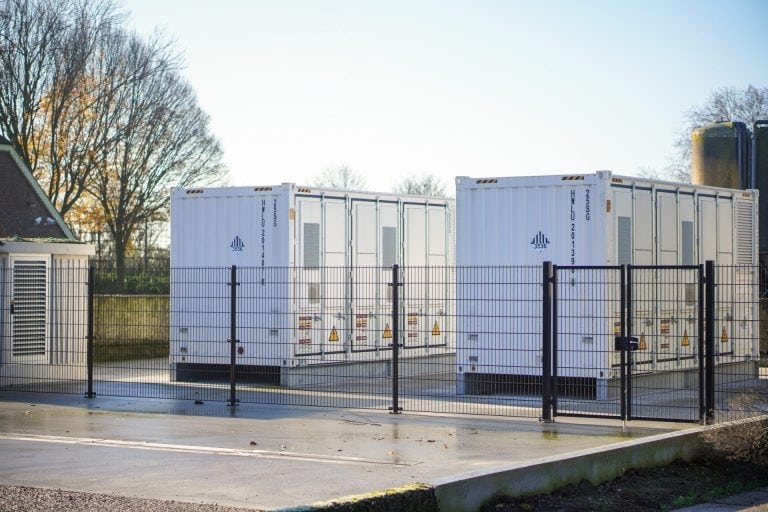
Energy storage on the 2025 Energy List: these are the current requirements of the EIA scheme
The 2025 Energy List contains a number of relevant changes for companies that want to invest in energy storage. For the first time, various types of battery systems have been explicitly included as EIA-qualifying assets. This is relevant for organizations that face grid congestion, rising energy tariffs, or the desire to utilize more self-generated energy. The EIA will remain an important fiscal incentive in 2025, but the conditions are specific and differ from previous years. In this article, we clearly outline which forms of energy storage qualify, what technical requirements apply, and what companies need to consider when planning an investment.
1. Why energy storage is now on the Energy List
The government is encouraging energy storage because battery systems can reduce peaks on the electricity grid, increase the self-consumption of solar energy, and help companies deal with grid congestion. By placing batteries on the Energy List, the threshold for investing in systems that support the energy transition is lowered.
2. What is the EIA and what will change in 2025?
In 2025, the Energy Investment Allowance (EIA) offers a tax benefit of 40% on investment costs that meet the requirements of the Energy List. A new feature is that battery systems are explicitly included. The list has also been more sharply formulated: systems must demonstrably contribute to the storage and utilization of sustainably generated electricity.
3. Which energy storage systems qualify?
Batteries for storing sustainably generated electricity are listed under code 251118 on the Energy List. The basic conditions are:
– minimum 5 kW power
– minimum 15 kWh storage capacity
– linked to a sustainable energy source of at least 15 kW
– same grid connection as the generation installation
Systems with market coupling are also on the list, provided they meet specific requirements for measuring, controlling, and optimizing.
4. Technical requirements for EIA qualification
A system must technically fit within the objective of the scheme. This means: no lead-acid batteries, demonstrable coupling with the generation installation, and documentation showing that the system is designed to store and utilize sustainably generated electricity. These conditions are verifiable and are strictly enforced by RVO.
5. When does a company qualify and when does it not?
Qualifies:
storage linked to solar energy or other sustainable generation
systems that reduce peaks, increase self-consumption, or reduce grid load
installations that meet the technical requirements of the Energy List
Does not qualify:
storage used exclusively for trading without connection to sustainable generation
technologies such as lead-acid batteries
installations that are not connected to the generation on the same connection
6. Relevance in light of grid congestion
Many companies are hampered by limited grid capacity. Energy storage plays a clear role in this: it reduces feed-in peaks, enables the expansion of solar energy, and offers flexibility when expansions of the connection are not available. The combination of technical necessity and fiscal stimulus makes storage remarkably topical in 2025.
7. Practical considerations for the application
Report the investment within three months of entering into the obligation. Late reporting means that the EIA will definitively lapse.
Activate the system on the balance sheet and actually put it into use.
Keep technical documentation such as specifications, invoices, and delivery documents.
Plan the investment carefully, so that administration, technology, and project planning are aligned.
8. Calculation example: what does the EIA yield with a 1 MWh battery?
Suppose a company invests in a 1 MWh energy storage system with a total project price of €250,000.
Without EIA, this amount is depreciated regularly.
With EIA, an extra deduction item of 40% is created:
– 40% of €250,000 = €100,000 extra deduction
– Tax benefit at 25.8% CIT: €25,800
In this scenario, the EIA provides almost €26,000 in direct tax benefits. This is a realistic order of magnitude for business installations with substantial self-generation.
Conclusion
The addition of energy storage to the 2025 Energy List makes the EIA scheme more relevant than in previous years. The conditions are technically and administratively clear, and for many companies, this is an extra argument to include storage in their energy planning for the coming years. Whether it concerns increasing self-consumption, reducing pressure on the connection, or strengthening continuity: with the EIA, an investment in battery storage in 2025 will have a good basis.