THE NEXT STEP AFTER SELF-GENERATION

Commercial Energy Storage Systems

As an entrepreneur, do you want more control over your energy costs and certainty during power outages or peak consumption? The battery storage systems from Bata Energy Solutions ensure sustainable energy security. Whether you want to shave peaks, reduce energy costs, or go off-grid, we provide solutions ranging from 215 kWh to 5+ MWh.

The right battery storage for every energy need

Whether you run an SME or are responsible for a large-scale consumer: we provide battery storage systems that seamlessly align with your situation. With years of experience and technical expertise, we develop smart solutions for peak shaving, reducing grid congestion, and maximizing self-consumption. From compact 215 kWh systems to complete 5 MWh battery containers, we ensure future-proof integration into your existing energy infrastructure. Always with a focus on ROI, reliability, and the possibility to scale up later.

BENEFITS OF A BATTERY

Why choose an energy storage system?

Maximize self-generation

Save on energy costs by storing self-generated energy in a battery.

Peak shaving

No peak load on the grid connection with the installation of a battery.

Grid balancing

Battery offers the possibility for grid stabilization with earnings.

Emergency power supply

During a power outage, the battery takes over the power supply.

COMPLETED ENERGY SOLUTIONS

Battery systems as a solution

TECHNOLOGY

About Huawei Luna 2000

The Huawei Luna 2000 systems are equipped with air and liquid cooling, an integrated Battery Management System, and active monitoring of temperature, voltage, and cell status.
Multiple safety layers such as smoke and leak detection and an internal fire suppression module ensure maximum operational reliability and safety, even during prolonged and intensive use.

Sectors we serve

Customized solutions that address the energy challenges of your sector.

Possible applications

CUSTOMER STORY

Van Tuijl Kesteren

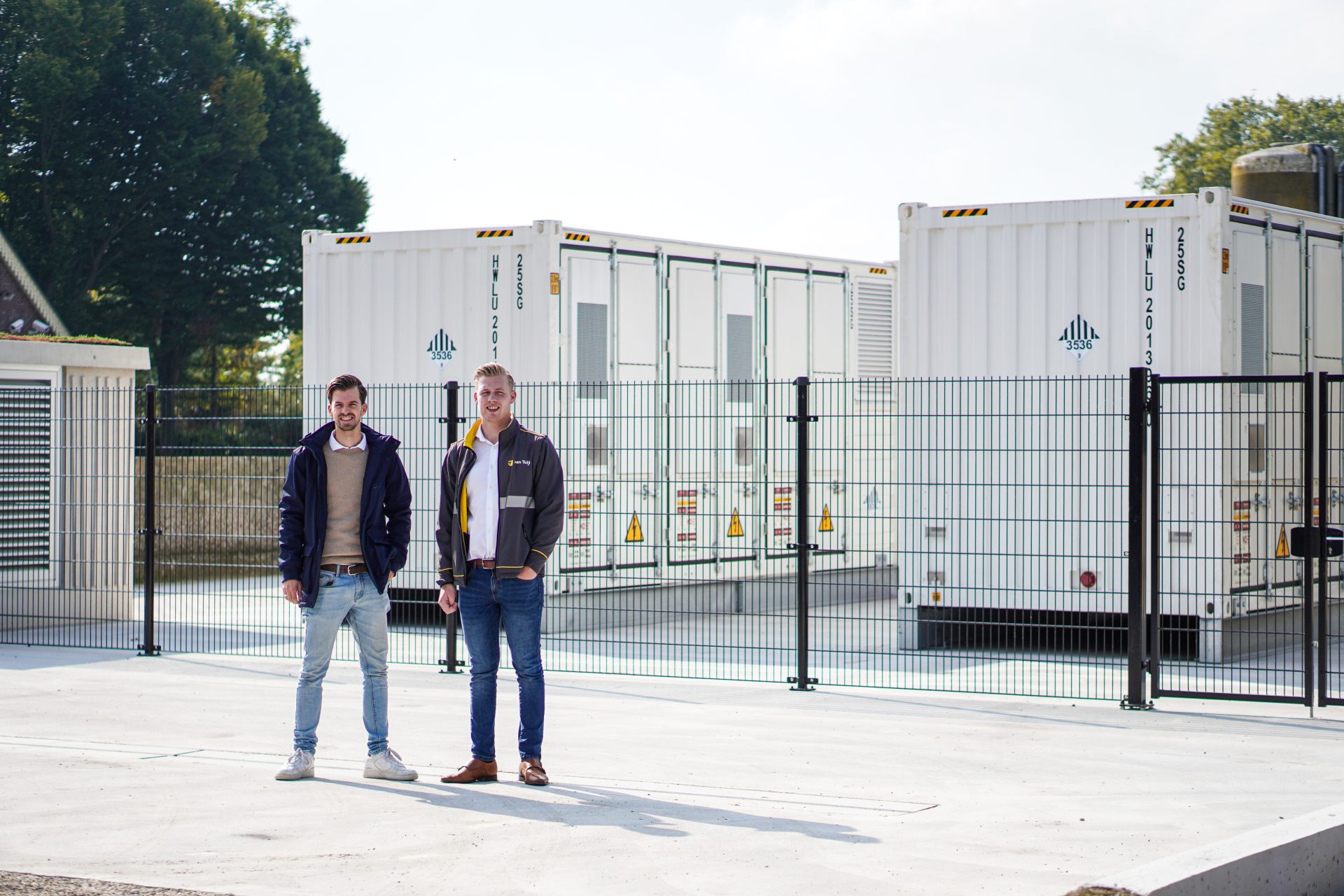
For this agricultural company, we delivered a 2x 2 MWh energy storage system, coupled with solar panels. They not only save on grid costs but also have energy security during peak hours, which is essential for modern agricultural processes.
Read more

Our Approach

Turnkey solutions
From initial exploration to delivery: we manage the entire process. One point of contact, direct communication, and an installation that operates as agreed.

Permit and Subsidy Advice
We assist with grid connections, permit applications, and subsidies. This saves you time and maximizes your return on investment.

Installation and Monitoring
Our installation teams ensure safe and professional execution. After delivery, we monitor performance in real-time, so you always have insight.

About Bata Energy Solutions

With an energetic team of specialists, we realize installations that companies can rely on. Learn more about our working method on the About Us page.

Read more

PERSONAL ADVICE

Schedule an appointment with one of our advisors

Our advisors work with you to find the best energy solution for your situation. From battery storage and solar panels to smart control: you always receive honest advice based on ROI and feasibility.

Contact

Frequently Asked Questions

Below you will find answers to the most frequently asked questions about battery storage for businesses: grid congestion, payback period, the right size, lifespan, safety, and subsidies.

A battery system (also called energy storage or accumulator system) stores electricity when it is cheap or widely available, for example from your solar panels or the grid, and delivers it back when you need it. An energy management system (EMS) determines when the battery charges and discharges.

A battery charges when there is space on your grid connection and provides power during peak consumption. This keeps your consumption below your contracted transmission capacity (peak shaving) and allows you to expand with machinery, charging points, or solar panels without waiting for a heavier connection. At Euro-Cool in ‘t Goy, four battery cabinets totaling 860 kWh shave the peaks, so the cooling runs day and night without a heavier grid connection.

A battery pays for itself in three ways: lower peak and transmission costs, increased self-consumption of solar power, and income from the energy market. How much each part weighs varies by company. We calculate it based on your own consumption profile, so you can see the payback period before you invest.

A battery charges when electricity is cheap on the day-ahead market and delivers when electricity is expensive. Additionally, you can make capacity available for balancing the grid (aFRR, FCR, and mFRR) and participate in the grid operator’s congestion management. The EMS controls this automatically.

That depends on your peaks, your own generation, and what you want to do with the battery. We provide battery cabinets from approx. 215 kWh, containers from 1 to 5 MWh, and battery parks from 5 MWh, scalable up to 100 MWh and more. With an energy scan, we determine which size fits your consumption.

A cabinet operates at 400 V and is placed behind your existing connection, up to approximately 1 MWh. Above that, you choose a container: it operates at 800 V and connects via its own transformer station to the 10 kV medium-voltage grid. This gives you more power and capacity without a heavier low-voltage connection.

Yes. The battery stores the surplus solar power so that you can use it yourself in the evening or at a later time instead of feeding it back cheaply. At Van Tuijl in Kesteren, an energy storage system of 2 x 2 MWh is linked to the solar panels.

Our batteries have a cycle guarantee of up to 10 years or 5,000 cycles, with at least 70% capacity retention. The exact guarantee varies by model and manufacturer and is always stated in the quote.

Our systems feature liquid cooling, a battery management system, and monitoring of temperature, voltage, and cell status, with smoke and leak detection and an internal fire suppression module. For larger systems, the safety guidelines PGS 37-1 apply, which the government intends to make legally mandatory from January 1, 2027. Whether you need a permit is determined by the municipality. We assist with the application.

Batteries without liquid lead-acid fall under the Energy Investment Allowance (EIA). This allows you to deduct 40% of the investment from your fiscal profit, which yields an average net benefit of about 10%. Additionally, there are often provincial or regional schemes.

Yes, if the system is configured for it. In the event of a power outage, the battery takes over the power supply so that critical processes such as cooling or production continue to run.