
Chrysanthemum grower sees business case in battery storage for CO2 production
Tholen – The price of CO2 is rising. Furthermore, CO2 is frequently difficult to obtain due to supply issues. With a CHP, a grower can produce CO2 themselves, but what do you do with the electricity when EPEX prices are low during the day?
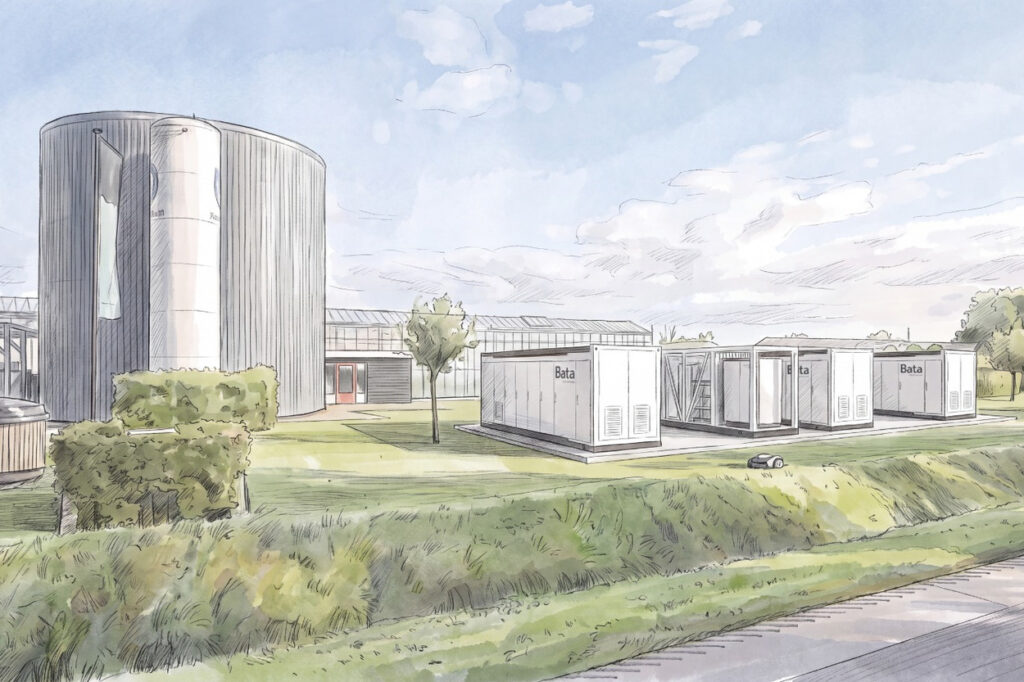
Store it in a battery system. Janity Flowers is having a 15 MWh battery system installed at the end of this year for this purpose. This allows the grower to run their CHP to produce CO2 while storing the generated electricity.
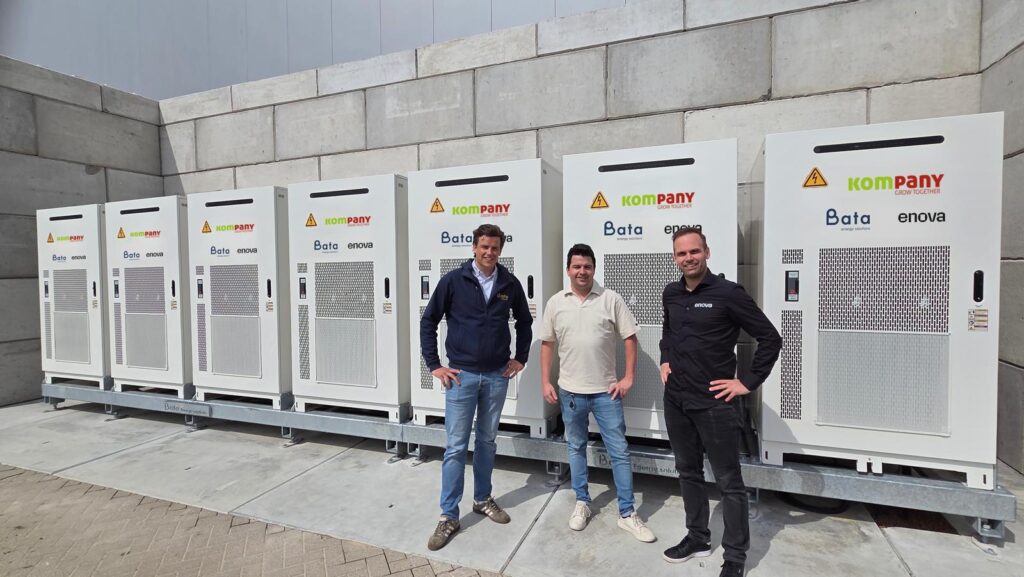
“This is the first, or one of the first, batteries used to store energy produced by a CHP, enabling a grower to produce their own CO2 and avoid purchasing expensive CO2. Janity Flowers is the first grower to recognize this business case,” says William Arends of Bata Energy Solutions, a specialist in solar energy and battery storage systems for the agricultural sector, among others.
Gas consumption without CO2 emissions Janity Flowers grows chrysanthemums on 5 hectares in Bruchem. “We think a step bigger than usual,” says Jarno van Wijk about the decision to take this step. According to the grower, a project like this was ‘never really financially viable’ until ‘the CO2 factor was added’. “In this way, we can safeguard our CO2 throughout the day. It provides more certainty and makes us independent, even if the power grid fails.”
Once the 15 MWh battery storage is completed at the end of this year, Jarno will be able to run 2 MW with his CHP during summer days to produce CO2. That CO2 goes directly into his greenhouse to optimize the cultivation of his chrysanthemums. “We are currently calculating with various parties how much we reduce our CO2 emissions by only running the CHP when we have a CO2 demand. In effect, consuming gas without CO2 emissions,” Jarno emphasizes.
7-hour spread
The electricity generated by the CHP is stored in the battery. William: “During the day, the grower stores power, and at night we feed the power back into the grid when feed-in prices are more favorable.”
To calculate the business case, Bata studied the 7-hour spread of the EPEX electricity market with the grower. “We studied a year’s worth of data and saw that EPEX prices are often lowest between roughly 10 AM and 5 PM.” At those times, feeding electricity back into the grid is financially less attractive, even though growers are generating electricity because their CHP is running for CO2 production.
Jarno adds: “At the beginning and end of the day, power prices are usually still fine for running for the grid. During the remaining hours, we can run at 80% or at the full 2 MW. That power then goes into the battery to be fed back during expensive evening hours or used by ourselves during the night.” Janity Flowers uses LED lighting for cultivation.
Jarno also points to the possibility of potentially drawing electricity from the grid and storing it in the battery. “We can charge the battery with CHP power and grid power, up to a maximum of 3.8 MW in total. This allows you to run for CO2 and utilize cheap power from the grid. That way, we are super flexible.”
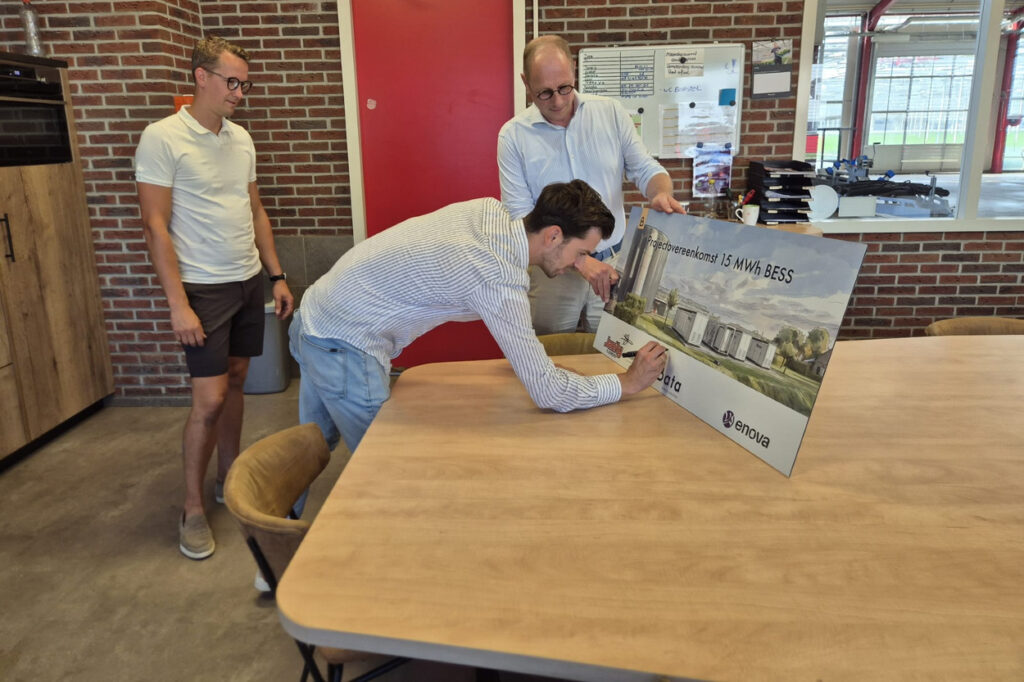
The contracts have been signed by Janity Flowers, Bata Energy Solutions, and Enova. Enova and Vedder Advies will manage the project’s control systems. Vedder Advies advised Janity Flowers on developing the business case. The battery will also be deployed in other energy markets. Vedder Advies will handle this in collaboration with Enova, which specializes in optimizing energy assets in the horticulture sector.